


6th century BC · China
Laozi
“A journey of a thousand miles begins with a single step.”
— Tao Te Ching, Ch. 64Their life
The old master of the Tao Te Ching — eighty-one brief chapters on water that wears down stone, leaders who serve, and the strength found in yielding. Half of Chinese thought answers to him.
Known for
- Authorship of the Tao Te Ching
- The concept of the Tao
- Wu wei
- or effortless action
- Water and yielding as strength
- Founding philosophical Daoism
The road they walked
Laozi comes to us less as a documented man than as a name attached to a book and a legend that grew up around both. The earliest full account, written by the historian Sima Qian some four centuries after Laozi supposedly lived, describes him as Li Er, a keeper of archives at the Zhou royal court — a quiet, learned official whose job was to mind the empire's records. Even Sima Qian hedged his own story, noting other candidates and admitting uncertainty about which Laozi, if any, was the real one.
He would have worked, if he worked at all, in the twilight of the Zhou dynasty, when the king's authority had thinned to ceremony and the land was splintering into rival states grasping for power. It was an age hungry for answers about how to rule and how to live, and it produced rival schools that argued past one another for centuries: Confucians insisting on ritual, duty, and hierarchy, and the current that would become Daoism countering with an image of nature's quiet, patient force — water finding the low ground, the uncarved block, the ruler who governs by getting out of the way. One story, unverifiable but beloved, has the young Confucius traveling to consult the older, wiser Laozi and coming away chastened.
What survives and matters most is the Tao Te Ching itself, whose earliest known fragments — bamboo slips unearthed at Guodian — date to roughly the fourth century BC, suggesting the text took shape gradually rather than springing from a single sitting. Scholars now generally treat 'Laozi' as much a symbol of accumulated wisdom as a single historical author. Whatever its origins, the book became one of the two poles of classical Chinese thought, shaping statecraft, poetry, medicine, and martial arts, and later provided the seed for a religious Daoism that worshipped Laozi as a god.
How their story ended
There is no reliable record of Laozi's death, only a legend: that in old age, weary of a crumbling court, he rode west on an ox toward the mountain passes and was stopped at the frontier by a gatekeeper named Yinxi, who begged him to set his wisdom down before vanishing. The Tao Te Ching, tradition says, was written there in a single sitting, after which Laozi rode on and was never heard from again. Historians disagree not just on how he died but on whether he lived at all as a single person — his final chapter remains, fittingly, a mystery he seems to have chosen.
In their words
“The sage does not accumulate for himself. The more he does for others, the more he has himself.”
— Tao Te Ching, ch. 81
“A tree that is unbending is easily broken.”
— Tao Te Ching, ch. 76
“The softest thing in the world overcomes the hardest thing in the world.”
— Tao Te Ching, Ch. 43
We attribute every quotation to the person we believe said it, and cite the source where we can place it. If you spot a misattribution or a factual error, please tell us — we will check it and correct the record.
Tables where Laozi sits


The Eastern Path
For wisdom that flows rather than forces.


The Sacred Circle
For inner peace and meaning across the world’s wisdom traditions.


The Self-Reliance Circle
For decisions that must come from your own center, not the crowd.
From the Journal
Books by Laozi
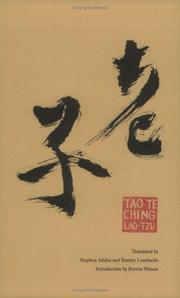
Books about Laozi
Laozi at MentorMinds is an original AI simulation based on the public record — their writings, speeches, and documented life. It is not the real person and is not affiliated with or endorsed by them or their estate. Counsel is for learning and reflection.