


1879–1955 · Germany & United States
Albert Einstein
“Imagination is more important than knowledge. For knowledge is limited, whereas imagination embraces the entire world, stimulating progress, giving birth to evolution.”
— Interview, 'What Life Means to Einstein,' Saturday Evening Post, 1929Their life
Theoretical physicist whose theories of relativity remade our understanding of space and time. A patent clerk turned Nobel laureate, he was equally known for playful humility, pacifism, and relentless thought experiments.
Known for
- Special and general relativity
- E = mc²
- Nobel Prize for the photoelectric effect
- 1919 eclipse confirmation of relativity
- Einstein–Szilard letter to Roosevelt
- Princeton exile and public conscience
The road they walked
Born in Ulm in 1879 to a secular Jewish family of small electrical manufacturers, Einstein was a curious, unhurried child who taught himself geometry and calculus years ahead of school, even as teachers found him unremarkable and his own myth later inflated the gap between the two. He trained as a physicist at Zurich's Federal Polytechnic, graduated in 1900, and then spent two years unable to secure an academic post — a rejection that pushed him into the Swiss patent office in Bern, where he evaluated technical applications by day and reworked the foundations of physics by night.
That patent-office interlude produced 1905, the 'miracle year': in the space of months he published four papers, on the photoelectric effect, Brownian motion, special relativity, and the equivalence of mass and energy, any one of which would have made a career. He spent the following decade extending relativity to gravity itself, publishing the general theory in 1915 — a set of equations describing spacetime as something curved by mass. When Arthur Eddington's 1919 eclipse expedition confirmed that starlight bent exactly as Einstein predicted, newspapers made him an overnight global celebrity, a physicist known by face and name to people who had never read an equation.
The 1921 Nobel Prize came not for relativity, still contested by some physicists, but for his explanation of the photoelectric effect. As a public figure he became an outspoken pacifist, internationalist, and, after 1933, a refugee — dismissed from his position and stripped of citizenship once the Nazis rose to power, he emigrated to the United States and settled at Princeton's Institute for Advanced Study. In 1939, alarmed by the possibility of Nazi nuclear research, he co-signed the letter urging Roosevelt to pursue atomic weapons research, though he took no part in the Manhattan Project itself. His last decades were spent largely outside the physics mainstream, chasing an unfinished unified field theory while lending his voice to civil rights and anti-nuclear causes.
How their story ended
Einstein died on April 18, 1955, in Princeton, New Jersey, from the rupture of an abdominal aortic aneurysm he had known about for years and declined to have surgically repaired, saying he wished to go 'elegantly.' He was 76. A draft speech for Israel's Independence Day sat unfinished on his desk, alongside pages of the unified field theory he never completed. In a final, unauthorized act, the pathologist who performed his autopsy removed his brain for study, an episode that remains a point of controversy in accounts of his death.
In their words
“I, at any rate, am convinced that He does not throw dice.”
— Letter to Max Born, 1926
“I have no special talents. I am only passionately curious.”
— Letter to Carl Seelig, 1952
“Life is like riding a bicycle. To keep your balance, you must keep moving.”
— Letter to his son Eduard Einstein, 1930
We attribute every quotation to the person we believe said it, and cite the source where we can place it. If you spot a misattribution or a factual error, please tell us — we will check it and correct the record.
Tables where Albert sits


The Inventors’ Bench
For chasing curiosity and building what doesn’t exist yet.


The Scientist’s Bench
For rigorous thinking, failed experiments, and staying curious.
From the Journal
Books by Albert
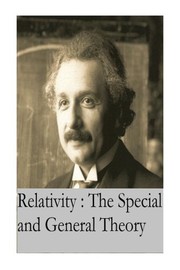
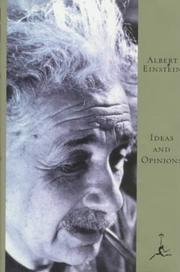
Books about Albert
Albert Einstein at MentorMinds is an original AI simulation based on the public record — their writings, speeches, and documented life. It is not the real person and is not affiliated with or endorsed by them or their estate. Counsel is for learning and reflection.