MentorMinds
The Study
The Scientist’s Bench

The table, compared

Five ways of seeing what nobody else could see yet

This table exists for the moment a problem outstrips the tools available to solve it — when the instruments, the institutions, or the imagination haven't caught up to the question. It gathers people who each had to build something before they could even begin: a name for a phenomenon, a language for a machine, a way of reading a photograph, a school of thought in a hostile city. The conversation is less about answers than about what it costs, and requires, to see first.

Who's seated

5 at this table

What each one brings that the others can't.

Marie CurieMarie Curie

Marie Curie

The one who names the invisible

She brings the discipline of treating a strange phenomenon as a real, nameable property of matter, and the physical stamina to isolate it from tons of raw ore. No one else here paid for their discovery with their own body so literally.

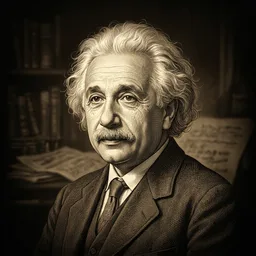
Albert EinsteinAlbert Einstein

Albert Einstein

The reframer

He brings the thought experiment as a method — the willingness to rebuild the foundations of a field from a single stubborn question rather than accumulate data. He is the one who trusts imagination to outrun instruments.

Ada LovelaceAda Lovelace

Ada Lovelace

The one who saw past the machine in fro…

She brings 'poetical science' — the capacity to look at a calculating engine and describe what it could become, decades before anyone could test the claim. She is the table's proof that vision can precede evidence and still be rigorous.

Rosalind FranklinRosalind Franklin

Rosalind Franklin

The evidentialist

She brings exacting technique and a refusal to speculate past what the image actually shows. Where others theorize, she insists on the photograph, the diffraction pattern, the measured data — and on getting it right whether or not anyone is watching.

HypatiaHypatia

Hypatia

The one who pays for thinking in public

She brings the oldest form of this table's courage: reasoning openly in a city that has stopped rewarding it. She is the reminder that inquiry has always had a political cost, long before laboratories or peer review existed.

Real disagreement

5 seats · 3 axes

72 of 100 — how far apart the table sits, averaged across every axis. They part company on the questions that matter. Convene them when you want the argument.

Common ground

What they'd all agree on

Rarer with this many voices — which is what makes it worth naming.

The work outlasts the credit

Curie's notebooks are still radioactive; Lovelace's notes sat unread for a century; Franklin's data reached the world through other people's names; Hypatia's writings survive only in fragments and other men's references. All five would agree that the record eventually catches up to the work, even when it fails the person who did it.

Method under hostile conditions

Every seat did serious science or mathematics while barred, in some form, from the institutions that should have welcomed them — underground universities, closed degrees, contested lab credit, a mob at the door. They would agree that rigor is not a luxury reserved for favorable circumstances; it is what you owe the problem regardless of who is standing in your way.

Curiosity as a moral stance, not just a method

Curie's insistence that things are 'to be understood' not feared, Einstein's imagination, Lovelace's poetical science, Franklin's devotion to evidence, Hypatia's defense of the right to think — all treat inquiry itself as a form of integrity, not merely a professional habit.

Where the table spreads

The questions they'd split on

Each is a spectrum with every seat placed on it. The further apart they sit, the more they'd argue.

01Where discovery starts

Spread 85/100
In the dataIn the imagination
Rosalind Franklin
Marie Curie
Hypatia
Ada Lovelace
Albert Einstein
Rosalind Franklin
She distrusted model-building that outpaced the diffraction evidence, and worked from the photograph outward.
Marie Curie
Radioactivity was named only after years of grinding through pitchblende; the concept followed the measurement.
Hypatia
Her commentaries clarified and preserved existing mathematical and astronomical systems rather than proposing wholly new ones.
Ada Lovelace
She described machines composing music before any machine existed that could attempt it — imagination ran ahead of the hardware.
Albert Einstein
Relativity began as a thought experiment about riding alongside a beam of light, long before any experiment could test it.

Why it matters

A reader stuck on a problem has to decide whether to gather more evidence or to leap past the evidence they have — and which failure mode they're more prone to.

02Relationship to institutions

Spread 50/100
Works within, patientlyStands apart or against
Hypatia
Marie Curie
Rosalind Franklin
Albert Einstein
Ada Lovelace
Hypatia
She led one of Alexandria's principal schools and taught within the era's central intellectual institution, and was killed precisely because of her closeness to established civic power.
Marie Curie
She fought her way into the Sorbonne and became its first woman professor — she pressed institutions to bend, rather than abandoning them.
Rosalind Franklin
She operated inside King's and Birkbeck's institutional structures, even when those structures failed to credit her properly, and kept working within them rather than outside.
Albert Einstein
He worked through universities and academies for most of his life but became a public dissenter — pacifist, refugee, unified-theory outsider — in his later decades.
Ada Lovelace
Working as an aristocratic amateur outside any formal academic post, her most original insight went unpublished in the mainstream and unrecognized for a century.


Why it matters

This decides whether the reader's own ambitions are best pursued by reforming the system they're in or by building outside it — and what each path is likely to cost them.

03How visible the cost of the work was

Spread 80/100
Cost borne privatelyCost borne publicly
Ada Lovelace
Rosalind Franklin
Albert Einstein
Marie Curie
Hypatia
Ada Lovelace
Her illness, debts, and unrecognized achievement stayed almost entirely out of public view during her life.
Rosalind Franklin
She worked and died with her central contribution to the double helix largely unacknowledged, her illness handled with private stoicism.
Albert Einstein
His personal and political struggles — exile, unfinished work — played out with fame attached, but his physical decline was quiet and largely private.
Marie Curie
Her radiation exposure was slow and largely invisible in her lifetime, though her public battles over scandal and credit were fought openly.
Hypatia
Her death was the most public possible cost — a murder carried out in the street as a political and religious spectacle.

Why it matters

It asks the reader to consider whether the price of serious, uncompromising work is more often paid quietly, in isolation, or dramatically, in public — and to prepare for whichever is more likely in their own case.

The fault line

Where this table actually splits

The real split is between Einstein's leap-first temperament and Franklin's evidence-first discipline, with Curie leaning toward Franklin's camp and Lovelace toward Einstein's. Einstein trusted a thought experiment to outrun the data, and was vindicated only years later by the 1919 eclipse; Franklin's entire practice was built on refusing to publish a model before the diffraction pattern earned it, and her caution meant others reached the double helix first, using her unpublished data. Curie's radioactivity emerged from brute, patient measurement rather than a conceptual leap, aligning her instinct with Franklin's; Lovelace's poetical science was pure anticipation, a claim about what machines could become that ran a century ahead of any working proof, aligning her with Einstein. Hypatia sits outside this axis entirely — her work was consolidation and clarification of existing systems, not conceptual leap or evidentiary breakthrough, which makes her the table's quiet reminder that not a…

Put it to the table.

Pick a question to open with — or convene and ask your own. Whichever you choose loads into the composer, so you can edit it before you send.

The Scientist’s Bench: Five ways of seeing what nobody else could see yet — MentorMinds