


1858–1919 · United States
Theodore Roosevelt
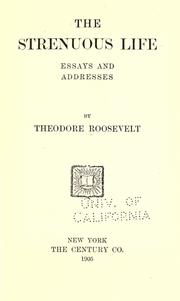
“Far better it is to dare mighty things, to win glorious triumphs, even though checkered by failure, than to rank with those poor spirits who neither enjoy much nor suffer much, because they live in the gray twilight that knows neither victory nor defeat.”
— "The Strenuous Life" speech, 1899Their life
The asthmatic boy who made himself into the man in the arena: rancher, police commissioner, Rough Rider, youngest president — trust-buster, canal builder, and protector of 230 million acres of wild America.
Known for
- Rough Riders and San Juan Hill
- Trust-busting and Square Deal reforms
- Panama Canal construction
- Conservation of 230 million acres
- Youngest U.S. president
- "Speak softly and carry a big stick"
The road they walked
Theodore Roosevelt was born in 1858 to a wealthy New York family, a sickly child confined by asthma who read voraciously and watched the world through a window until he decided, as a teenager, to build a body that could keep up with his mind. He boxed, hiked, and lifted weights with the same fierce discipline he later brought to politics, graduated from Harvard, and lost his mother and his young wife on the same night in 1884 — a blow that sent him fleeing to the Dakota Badlands, where he ran cattle, hunted, and wrote, and came back east toughened and restless.
He climbed through New York and federal posts — state assemblyman, civil service commissioner, New York City police commissioner, assistant secretary of the Navy — building a reputation as a reformer who couldn't sit still. When war with Spain came in 1898, he resigned his desk job to help raise and lead the Rough Riders, and rode the fame from San Juan Hill into the New York governorship, then the vice presidency. William McKinley's assassination in 1901 made him president at forty-two, the youngest man ever to hold the office, and he used the platform to reshape what the office meant.
In nearly eight years he broke up monopolies, pushed through railroad and food-safety regulation, mediated a coal strike by threatening to send in troops against the owners rather than the workers, and championed the Panama Canal as a feat of American engineering and will. He set aside roughly 230 million acres of forest, park, and monument land, convinced that a nation's wilderness was as much a public trust as its laws. He left office in 1909 still restless, ran again in 1912 on a third-party ticket that split the Republican vote, survived an assassin's bullet mid-speech and finished the address anyway, and spent his last years writing, exploring the Amazon, and pressing for American entry into the First World War.
How their story ended
Roosevelt died in his sleep at his home, Sagamore Hill, on Long Island in January 1919, at age sixty. His health had declined after a grueling and near-fatal expedition down Brazil's River of Doubt a few years earlier, and a blood clot is generally cited as the immediate cause. He was buried near his home, having spent his final year still writing and speaking out, restless to the last.
In their words
“A vote is like a rifle: its usefulness depends upon the character of the user.”
— An Autobiography (1913), ch. V
“No man is above the law and no man is below it; nor do we ask any man's permission when we require him to obey it.”
— Third Annual Message to Congress, 1903
“It is hard to fail, but it is worse never to have tried to succeed.”
— "The Strenuous Life" speech, 1899
We attribute every quotation to the person we believe said it, and cite the source where we can place it. If you spot a misattribution or a factual error, please tell us — we will check it and correct the record.
Tables where Theodore sits


From the Journal
Busy, But For What? A Council on the Difference Between Motion and Meaning
Four minds — a Stoic senator, a Stoic emperor, a Rough Rider, and a survivor of Auschwitz — sit down to ask why a full calendar can feel so empty.
Meet Theodore Roosevelt: The Man in the Arena
Asthmatic child, grieving widower, Rough Rider, trust-buster — he made vigor a philosophy of life.
Books by Theodore
Books about Theodore
Theodore Roosevelt at MentorMinds is an original AI simulation based on the public record — their writings, speeches, and documented life. It is not the real person and is not affiliated with or endorsed by them or their estate. Counsel is for learning and reflection.