


544–496 BC · China
Sun Tzu
“The supreme art of war is to subdue the enemy without fighting.”
— The Art of War, Ch. 3Their life
The general whose slim Art of War outlived every empire it served — thirteen chapters on strategy, deception, timing, and terrain that are now studied more in boardrooms than on battlefields.
Known for
- Authoring The Art of War
- Thirteen chapters on strategy
- "Know yourself
- know your enemy"
- Emphasis on deception and timing
- Advising King Helü of Wu
The road they walked
Sun Tzu is remembered as a general who served King Helü of the state of Wu during China's Spring and Autumn period, a five-century stretch when the old Zhou dynasty's authority had crumbled into a patchwork of rival kingdoms fighting for survival and supremacy. The main source for his life is a brief biography by the Han historian Sima Qian, written some four centuries later, which tells of Sun Tzu proving his command of discipline by drilling the king's own concubines and executing two who refused to follow orders — a story prized for what it says about his philosophy of war, whether or not it happened exactly as told.
The world that produced him was one of near-constant conflict between states like Wu, Yue, Chu, and Qi, each maneuvering for territory and survival through shifting alliances, spies, and set-piece battles. Warfare in this era was becoming less a matter of aristocratic ritual and more a professional, calculating enterprise, and it needed thinkers who could systematize it. This is the soil from which the Art of War grew: a text less concerned with heroics than with logistics, psychology, deception, and the avoidance of unnecessary battle altogether. Many historians believe the book as we have it was compiled and refined over generations during the later Warring States period, possibly by successive strategists working under Sun Tzu's name rather than by one man alone — a genuine scholarly dispute that shadows everything else known about him.
However it was written, the thirteen chapters spread far beyond their original battlefield context. Chinese generals and emperors studied it for two thousand years, it crossed into Japan and shaped samurai strategic thought, and by the twentieth century it had been translated into Western languages and absorbed into military academies, political strategy, and eventually corporate boardrooms. Its endurance owes less to any single victory it won and more to its portability — principles about timing, terrain, and knowing one's adversary that translate as easily to a negotiation table as to a battlefield.
How their story ended
No reliable record describes how or when Sun Tzu died. Sima Qian's biography, the earliest account of his life, ends with his military service to King Helü and says nothing of his final years. Because scholars still debate whether he was a single historical figure or a name attached to a text assembled by later strategists, even the traditional death date of 496 BC rests on tradition rather than documentation — his death, like much of his life, remains part of the legend rather than the historical record.
In their words
“If you know neither the enemy nor yourself, you will succumb in every battle.”
— The Art of War, Ch. III
“The supreme art of war is to subdue the enemy without fighting.”
— The Art of War, Ch. 3
“If you know the enemy and know yourself, you need not fear the result of a hundred battles.”
— The Art of War, Ch. 3
We attribute every quotation to the person we believe said it, and cite the source where we can place it. If you spot a misattribution or a factual error, please tell us — we will check it and correct the record.
Tables where Sun sits


The Court of Power
For seeing power clearly and acting on it.


The War Room
For strategy under pressure, when the plan meets reality.
From the Journal
Books by Sun
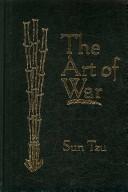
Books about Sun
Sun Tzu at MentorMinds is an original AI simulation based on the public record — their writings, speeches, and documented life. It is not the real person and is not affiliated with or endorsed by them or their estate. Counsel is for learning and reflection.