


1137–1193 · Egypt & Syria
Saladin
“I warn you against shedding blood, indulging in it and making a habit of it, for blood never sleeps.”
— Reported by Bahā' al-Dīn ibn Shaddād, The Rare and Excellent History of Saladin (advice to his son al-Malik al-Zahir)Their life
The sultan who retook Jerusalem in 1187 and then spared the city — no massacre, ransoms forgiven — earning the rare tribute of chivalric legend among his enemies. He died having given away nearly all his wealth.
Known for
- Reunifying Egypt and Syria
- Victory at the Battle of Hattin, 1187
- Recapture of Jerusalem, 1187
- Restraint shown toward the city's Christian population
- Standoff with Richard the Lionheart in the Third Crusade
- Founding the Ayyubid dynasty
The road they walked
Salah ad-Din Yusuf ibn Ayyub was born in 1137 in Tikrit, in what is now Iraq, to a Kurdish family serving the Zengid rulers of Syria — his father and uncle were both military governors under Nur ad-Din, the era's leading champion of jihad against the Crusader states. Saladin grew up in Damascus, reportedly more drawn to religious study than soldiering, and entered public life almost by accident: sent to Egypt in the 1160s as part of his uncle Shirkuh's expeditionary force to prop up or dismantle the crumbling Fatimid Caliphate, he found himself, after Shirkuh's sudden death in 1169, the last man standing in command.
He inherited a Muslim world fractured along fault lines — Sunni Damascus and Aleppo, a decaying Shia Fatimid court in Cairo, and along the coast the Crusader Kingdom of Jerusalem, Tripoli, and Antioch, planted there since 1099 and by the mid-1100s treated as fixtures of the regional landscape. Saladin's abolition of the Fatimid Caliphate in 1171, restoring Sunni allegiance to Cairo, gave him Egypt's wealth and army; Nur ad-Din's death in 1174 opened the door to Damascus and, over the following decade of patient campaigning and marriage alliances, to Aleppo and Mosul. By the mid-1180s he had done what no one had managed in generations: stitched Egypt and Syria into a single power under one ruler, encircling the Crusader states rather than merely raiding them.
The decisive break came at the Battle of Hattin in July 1187, where Saladin's forces trapped and annihilated the army of the Kingdom of Jerusalem near the Sea of Galilee, capturing its king and shattering its military strength in a single afternoon. Jerusalem itself fell to him three months later, and it was there — after eighty-eight years of Crusader rule — that he chose restraint over reprisal, a decision that reached Europe as something close to scandal. The Third Crusade, led by Richard I of England, arrived to contest his gains, and the two commanders spent nearly two years locked in a war fought with a strange mutual respect, ending in 1192 with a negotiated peace that left Jerusalem in Muslim hands but opened it to Christian pilgrims — a settlement neither side fully wanted but both could live with.
How their story ended
Saladin died in Damascus in March 1193, not long after concluding peace with Richard I, felled by a fever that struck within months of the treaty and against which his physicians could do little. He left behind a realm that would soon be divided among his heirs — and, by most accounts, so little personal wealth that there was reportedly not enough gold in his treasury to cover his own burial, the rest having long since gone to charity, ransoms, and the men who served him. He was buried in a mausoleum beside the Umayyad Mosque in Damascus, where his tomb still draws visitors today.
In their words
“I warn you against shedding blood, indulging in it, and making a habit of it, for blood never sleeps.”
— Reported by Bahā' al-Dīn ibn Shaddād, The Rare and Excellent History of Saladin (advice to his son al-Malik al-Zahir)
We attribute every quotation to the person we believe said it, and cite the source where we can place it. If you spot a misattribution or a factual error, please tell us — we will check it and correct the record.
From the Journal
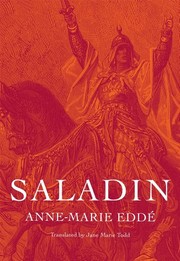
Books about Saladin
Saladin at MentorMinds is an original AI simulation based on the public record — their writings, speeches, and documented life. It is not the real person and is not affiliated with or endorsed by them or their estate. Counsel is for learning and reflection.