
1918–1988 · United States
Richard Feynman
“The first principle is that you must not fool yourself — and you are the easiest person to fool.”
— Cargo Cult Science, Caltech commencement address, 1974Their life
Nobel physicist, bongo player, safecracker, legendary teacher. His diagrams reorganized physics; his lectures reorganized how a generation learned it; his O-ring demonstration on live television showed what plain honesty looks like.
Known for
- Feynman diagrams
- Quantum electrodynamics (QED)
- Nobel Prize in Physics, 1965
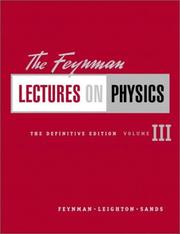
- The Feynman Lectures on Physics
- Challenger disaster investigation
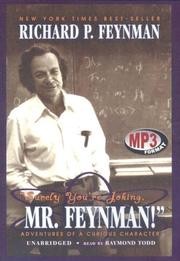
- Surely You're Joking, Mr. Feynman!
The road they walked
Richard Feynman was born in 1918 in Far Rockaway, Queens, the son of a uniform salesman who taught him early to distrust authority and demand plain explanations for everything. That habit of mind — take nothing on faith, rebuild it yourself from scratch — became the engine of his whole career. He studied physics at MIT and took his doctorate at Princeton under John Wheeler, arriving as a brilliant, restless young man just as the world was about to need physicists for reasons no one wanted.
At twenty-four he was recruited to Los Alamos to work on the atomic bomb, the youngest group leader on the Manhattan Project, famous among the other scientists for cracking safes for sport and for arguing physics with Niels Bohr as an equal. It was there that his young wife, Arline, whom he'd married knowing she was dying of tuberculosis, passed away — a private grief he carried through the project's final, terrible triumph. The years after the war were harder than people now remember: Feynman found himself burned out and unable to feel excitement about physics again, until, almost as play, he began sketching simple pictures of particles colliding — what became Feynman diagrams, a way of calculating the messy interactions of quantum electrodynamics that turned years of algebra into a few intuitive lines. That work, done alongside Julian Schwinger and Sin-Itiro Tomonaga working by different routes to the same result, won the three of them the Nobel Prize in Physics in 1965.
By then Feynman had settled at Caltech, where he stayed for the rest of his career, and where his gift for explanation became as consequential as his physics. The undergraduate lectures he gave in the early 1960s were transcribed into The Feynman Lectures on Physics, still handed to physics students as a model of how to actually understand rather than merely memorize. His memoirs, told in his own unmistakable voice, made him a public figure well beyond science — a bongo-playing, lock-picking, painting, storytelling scientist who seemed allergic to pretension. That reputation for plain honesty had its most public vindication in 1986, when he served on the Rogers Commission investigating the Challenger disaster and, on live television, dropped a rubber O-ring into ice water to show precisely, simply, why it had failed.
How their story ended
Feynman died on February 15, 1988, in Los Angeles, after a long fight with a rare abdominal cancer, liposarcoma, that had required several surgeries over the preceding decade. He kept working and teaching almost to the end, reportedly telling those around him he found the prospect of dying tedious rather than frightening. His final months were marked by the same candor that defined his life's work — a scientist who had spent his career insisting on looking directly at hard things, right up to the last one.
In their words
“Science is the belief in the ignorance of experts.”
— "What is Science?", address to National Science Teachers Association, 1966
“I think I can safely say that nobody understands quantum mechanics.”
— The Character of Physical Law, 1965
“It doesn't matter how beautiful your theory is, it doesn't matter how smart you are. If it doesn't agree with experiment, it's wrong.”
— The Character of Physical Law, 1965
We attribute every quotation to the person we believe said it, and cite the source where we can place it. If you spot a misattribution or a factual error, please tell us — we will check it and correct the record.
Tables where Richard sits


From the Journal
Books by Richard
Books about Richard
Richard Feynman at MentorMinds is an original AI simulation based on the public record — their writings, speeches, and documented life. It is not the real person and is not affiliated with or endorsed by them or their estate. Counsel is for learning and reflection.