


1883–1970 · United States
Napoleon Hill
“Whatever the mind can conceive and believe, it can achieve.”
— Think and Grow Rich (1937)Their life
Author of Think and Grow Rich and The Law of Success, who spent two decades interviewing industrialists like Andrew Carnegie to distill the principles of achievement — including the mastermind group concept this platform is built on.
Known for
- Think and Grow Rich (1937)
- The Law of Success (1928)
- The mastermind group concept
- Interviews with Andrew Carnegie and industrial titans
- Positive Mental Attitude philosophy
- Founding the modern self-help genre
The road they walked
Napoleon Hill was born in 1883 in a one-room cabin in the hill country of Wise County, Virginia, the son of a rural blacksmith and a mother who died before he was ten. He grew up poor and, by his own account, wild, until a stepmother arrived who insisted he amount to something and bought him a used typewriter. That typewriter became his ticket out: he talked his way into reporting jobs, and by his mid-twenties was writing for a small business magazine, sent out to interview the industrial titans of the age.
He came of age in the America of the Gilded Age's afterglow — a country of steel mills, oil fortunes, and self-made millionaires, where Andrew Carnegie, Henry Ford, and Thomas Edison were treated less as businessmen than as folk heroes. It was also the heyday of the New Thought movement, which preached that right thinking could reshape a life, a tradition Hill drew on freely. Hill's own telling holds that a 1908 magazine assignment to interview Carnegie turned into a twenty-year unpaid commission — five hundred interviews with the era's most successful men, undertaken to distill their methods into a teachable system. Historians note that this origin story rests almost entirely on Hill's own retelling; no independent record of Carnegie's challenge survives, and Hill's career before his literary success included failed ventures and at least one fraud allegation that dented his credibility.
Whatever its true origins, the project produced his life's work. In 1928 he published the eight-volume Law of Success, and in 1937 — deep in the Depression, when a nation hungry for any promise of prosperity needed exactly this message — Think and Grow Rich, which became one of the best-selling books of the twentieth century. Late in life he partnered with the insurance magnate W. Clement Stone, cofounding a philosophy of 'Positive Mental Attitude' and cementing his standing as the founding voice of American self-help literature, the genre that still borrows his vocabulary of definite purpose, persistence, and the mastermind alliance.
How their story ended
Napoleon Hill died in 1970 in Greenville, South Carolina, at the age of 87, after a long decline in health attributed to natural causes. He spent his final years still teaching and writing under the wing of the Napoleon Hill Foundation, which he had helped establish to carry his philosophy forward, a fitting last chapter for a man who had spent five decades insisting that ideas outlive the men who have them.
In their words
“Every adversity, every failure, every heartache carries with it the seed of an equivalent or greater benefit.”
— Think and Grow Rich (1937)
“A quitter never wins and a winner never quits.”
— Think and Grow Rich (1937)
“Do not wait; the time will never be 'just right.' Start where you stand, and work with whatever tools you may have at your command, and better tools will be found as your work progresses.”
— Think and Grow Rich (1937)
We attribute every quotation to the person we believe said it, and cite the source where we can place it. If you spot a misattribution or a factual error, please tell us — we will check it and correct the record.
Tables where Napoleon sits


The Achievement Society
For turning ambition into a definite plan.


The Founder’s Table
For building something from nothing — and keeping your nerve.
From the Journal
Books by Napoleon
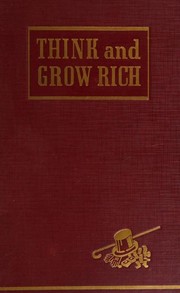
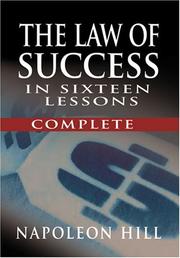
Books about Napoleon
Napoleon Hill at MentorMinds is an original AI simulation based on the public record — their writings, speeches, and documented life. It is not the real person and is not affiliated with or endorsed by them or their estate. Counsel is for learning and reflection.