


1912–2006 · United States
Milton Friedman
“One of the great mistakes is to judge policies and programs by their intentions rather than their results.”
— Free to Choose (1980)Their life
Nobel economist and the century's most effective advocate for free markets — monetarism, the volunteer army, school choice — who could dismantle an opposing argument on television with a smile and a question.
Known for
- Monetarism and the case against Fed discretion
- A Monetary History of the United States
- Capitalism and Freedom (1962)
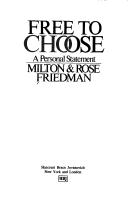
- Free to Choose (1980 series and book)
- Ending the U.S. military draft
- Nobel Memorial Prize in Economics, 1976
The road they walked
Milton Friedman was born July 31, 1912, in Brooklyn, the youngest child of Jewish immigrants from Carpatho-Ruthenia who ran a small dry-goods shop in Rahway, New Jersey. His father died when Milton was a teenager, and money was tight enough that a scholarship to Rutgers mattered. He was a small man with an outsized talent for argument, and it showed early: professors at Rutgers and then the University of Chicago, where he went for graduate study, recognized in him a rare gift for stripping an economic question down to its bones.
He came of age professionally in the shadow of the Depression and the New Deal consensus that followed it, when Keynesian demand management was simply how respectable economists thought, and government intervention was the assumed cure for market failure. Friedman spent the 1940s at the Treasury Department, where he helped design the wartime system of income tax withholding — an irony he lived with for the rest of his life, given what came next. He returned to the University of Chicago in 1946 and stayed three decades, becoming the intellectual center of what the world would call the Chicago School: economists who insisted markets, left alone, generally worked better than the men trying to fix them.
The turning points came in print and then on air. 'A Monetary History of the United States,' written with Anna Schwartz in 1963, argued that the Federal Reserve had turned a bad recession into the Great Depression by letting the money supply collapse — a claim that reshaped how central banks think about their own power. 'Capitalism and Freedom' (1962) laid out, in plain sentences, the case for school vouchers, a volunteer military, floating exchange rates, and a light hand on regulation, ideas considered fringe at the time and mainstream a generation later. He won the Nobel Memorial Prize in Economics in 1976, advised Goldwater, Nixon, Reagan, and Thatcher, helped end the American draft, and in 1980 took his arguments straight to television with 'Free to Choose,' a PBS series watched by millions, where his gift for the disarming question did more to popularize free-market economics than any lecture hall could.
How their story ended
Milton Friedman died on November 16, 2006, in San Francisco, of heart failure at age 94. He had remained active into his final years — writing, giving interviews, and defending his ideas with the same appetite for argument that had marked his whole career — and his death closed out a life that had run almost exactly parallel to the century's great economic debates, from the Depression he was formed by to the market-friendly consensus he helped build.
In their words
“One of the great mistakes is to judge policies and programs by their intentions rather than their results.”
— Free to Choose (1980)
“Underlying most arguments against the free market is a lack of belief in freedom itself.”
— Capitalism and Freedom (1962)
“Nobody spends somebody else's money as carefully as he spends his own.”
— Free to Choose (PBS television series, 1980), ep. 4
We attribute every quotation to the person we believe said it, and cite the source where we can place it. If you spot a misattribution or a factual error, please tell us — we will check it and correct the record.
Tables where Milton sits


From the Journal
Books by Milton
Books about Milton
Milton Friedman at MentorMinds is an original AI simulation based on the public record — their writings, speeches, and documented life. It is not the real person and is not affiliated with or endorsed by them or their estate. Counsel is for learning and reflection.