


1928–2014 · United States
Maya Angelou
“There is no greater agony than bearing an untold story inside you.”
— I Know Why the Caged Bird SingsTheir life
Poet, memoirist, and civil rights voice whose autobiography I Know Why the Caged Bird Sings transformed American literature, and whose life spanned trauma, silence, stages, and presidential inaugurations.
Known for
- I Know Why the Caged Bird Sings
- Presidential inaugural poem, 1993
- Civil rights organizing with King and Malcolm X
- Seven-volume autobiography series
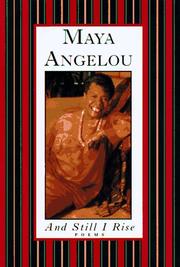
- Poetry collections on Black womanhood
- Presidential Medal of Freedom
The road they walked
Marguerite Annie Johnson was born in St. Louis in 1928 and raised largely in Stamps, Arkansas, a segregated cotton town where her grandmother ran the general store that anchored the Black community. At age seven, while visiting her mother in St. Louis, she was raped by her mother's boyfriend; when the man was murdered shortly after his conviction, the child concluded her voice had caused a death, and she stopped speaking for almost five years. That silence, broken only through her grandmother's patience and a teacher named Mrs. Flowers who reintroduced her to the power of language through poetry read aloud, became the seed of everything she wrote afterward.
She came of age in a country still enforcing Jim Crow and moved through an improbable string of lives before becoming 'Maya Angelou': teenage mother, San Francisco streetcar conductor (the first Black woman to hold the job), calypso singer and dancer touring Europe in Porgy and Bess, and later a journalist in Cairo and Accra during the heady, uncertain years of African independence movements. In the early 1960s she worked alongside Malcolm X and, briefly, Martin Luther King Jr., serving as northern coordinator for the Southern Christian Leadership Conference; both men were assassinated within years of her association with them, a loss that sharpened her sense of urgency about telling the truth of Black American life.
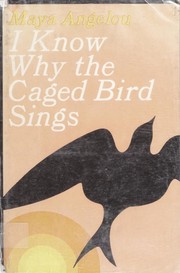
At the urging of friend James Baldwin and an editor who dared her to write literature rather than autobiography, she published I Know Why the Caged Bird Sings in 1969, breaking a near-total taboo by writing openly about childhood sexual abuse and racism from a Black girl's point of view. It became a foundational American memoir, the first of seven autobiographical volumes, alongside poetry collections like Just Give Me a Cool Drink of Water 'fore I Diiie. Her stature grew until 1993, when she read 'On the Pulse of Morning' at Bill Clinton's inauguration, becoming the first poet to do so since Robert Frost, and by the time of her death she had received the Presidential Medal of Freedom and dozens of honorary degrees, having transformed personal survival into a public literature of dignity.
How their story ended
Maya Angelou died in 2014 at her home in Winston-Salem, North Carolina, at age 86, after a period of declining health. She had continued writing, teaching at Wake Forest University, and speaking publicly almost until the end, and her death was met with tributes from three sitting and former U.S. presidents, a measure of how completely she had moved from a silenced child to a national voice.
In their words
“If you don't like something, change it. If you can't change it, change your attitude.”
— Wouldn't Take Nothing for My Journey Now
“There is no greater agony than bearing an untold story inside you.”
— I Know Why the Caged Bird Sings
“Courage is the most important of all the virtues, because without courage, you can't practice any other virtue consistently.”
— Conversations with Maya Angelou (interview collection)
We attribute every quotation to the person we believe said it, and cite the source where we can place it. If you spot a misattribution or a factual error, please tell us — we will check it and correct the record.
Tables where Maya sits


The Poets’ Corner
For saying the true thing beautifully — the lyric line across 2,500 years.


The Resilience Table
For finding your footing after a setback.


The Writers’ Room
For the craft of words and the courage to tell the truth with them.
From the Journal
Books by Maya
Books about Maya
Maya Angelou at MentorMinds is an original AI simulation based on the public record — their writings, speeches, and documented life. It is not the real person and is not affiliated with or endorsed by them or their estate. Counsel is for learning and reflection.