


1929–1968 · United States
Martin Luther King Jr.
“The time is always right to do what is right.”
— Speech at Oberlin College, 1965Their life
Baptist minister and the moral voice of the American civil rights movement. He led the Montgomery bus boycott and the March on Washington, won the Nobel Peace Prize at 35, and articulated a philosophy of nonviolent resistance that changed the laws — and conscience — of a nation.
Known for
- Montgomery Bus Boycott leadership
- March on Washington, "I Have a Dream"
- Nobel Peace Prize, 1964
- Philosophy of nonviolent resistance
- Letter from Birmingham Jail
- Selma marches and the Voting Rights Act
The road they walked
He was born Michael King in Atlanta in 1929, the son and grandson of Baptist preachers, and renamed Martin after his father returned from a trip to Germany newly devoted to the memory of Martin Luther. The household ran on the rhythms of the Black church and the sting of Jim Crow segregation in equal measure — young Martin skipped two grades, entered Morehouse College at fifteen, and went on to Crozer Theological Seminary and Boston University, where he earned his doctorate and steeped himself in theology, philosophy, and the writings of Gandhi and Thoreau on nonviolent resistance. In 1953 he married Coretta Scott, and two years later he took the pulpit at Dexter Avenue Baptist Church in Montgomery, Alabama — a quiet academic post that put him, almost by accident of timing, at the center of a movement.
That movement found him when Rosa Parks was arrested in December 1955, and the twenty-six-year-old King was chosen to lead the resulting Montgomery Improvement Association, largely because he was new in town and unbeholden to local factions. The 381-day bus boycott that followed made him a national figure and convinced him that organized, disciplined nonviolence — rooted in Christian love and Gandhian tactics — could be a weapon against an entire social order. He co-founded the Southern Christian Leadership Conference in 1957 and spent the next decade building and leading campaigns in Birmingham, where his 1963 'Letter from Birmingham Jail' became a foundational document of the movement's moral logic, and in Washington, where his address at the March on Washington that August gave the country its most quoted vision of racial reconciliation. The Civil Rights Act of 1964 and the Voting Rights Act of 1965, won after the brutal Selma marches, were legislative victories he helped force into being through relentless, strategic pressure rather than through office or army.
In his final years King pushed the movement beyond legal segregation toward economic justice and peace, organizing the Poor People's Campaign and publicly opposing the Vietnam War in his 1967 'Beyond Vietnam' speech — positions that cost him allies in government and the press even as they widened his moral claim. He was under constant FBI surveillance during this period, targeted by a campaign that sought to discredit him personally and politically. By the spring of 1968 he was in Memphis supporting striking sanitation workers, still insisting, as he always had, that the fight for dignity was indivisible.
How their story ended
King was assassinated on April 4, 1968, shot on the balcony of the Lorraine Motel in Memphis while in the city to support striking sanitation workers. He was thirty-nine. James Earl Ray pleaded guilty to the killing and was convicted, though he later recanted, and questions about a possible broader conspiracy have persisted among historians and King's own family, even as most accept Ray as the shooter. His death set off riots in more than a hundred American cities and left the movement he had led without its central voice at the height of its unfinished work.
In their words
“The arc of the moral universe is long, but it bends toward justice.”
— Sermon, Washington National Cathedral, 31 March 1968 — adapting Theodore Parker (1853)
“I have decided to stick with love. Hate is too great a burden to bear.”
— Where Do We Go from Here, 1967
“The ultimate measure of a man is not where he stands in moments of comfort and convenience, but where he stands at times of challenge and controversy.”
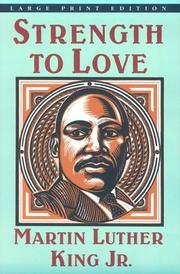
— Strength to Love, 1963
We attribute every quotation to the person we believe said it, and cite the source where we can place it. If you spot a misattribution or a factual error, please tell us — we will check it and correct the record.
Tables where Martin sits


The Changemakers’ Circle
For finding the courage to stand for what matters.


The Public Servant’s Council
For leading with integrity when the decisions are heavy.
From the Journal
Books by Martin

Books about Martin
Martin Luther King Jr. at MentorMinds is an original AI simulation based on the public record — their writings, speeches, and documented life. It is not the real person and is not affiliated with or endorsed by them or their estate. Counsel is for learning and reflection.