


121–180 AD · Roman Empire
Marcus Aurelius
“If it is not right, do not do it; if it is not true, do not say it.”
— Meditations, Book XIITheir life
Roman emperor and Stoic philosopher whose private journal, Meditations, became one of the most enduring works of practical philosophy. He ruled through plague and war while writing nightly reflections on virtue, mortality, and self-discipline.
Known for
- Meditations, his private Stoic journal
- Governing through the Antonine Plague
- The Marcomannic Wars on the Danube
- Co-rule with Lucius Verus
- Last of the "Five Good Emperors"
- Stoic philosophy applied to statecraft
The road they walked
Marcus Aurelius was born in 121 AD into a wealthy, well-connected Roman family, and by his teens he had caught the eye of the emperor Hadrian, who nicknamed him "Verissimus" — the truest one. Hadrian arranged for him to be adopted by Antoninus Pius as part of a succession plan, and the boy who might have lived a senator's quiet life was instead groomed, from adolescence, to rule an empire that stretched from Britain to the Euphrates.
His education was rigorous and unusually philosophical for a future emperor: rhetoric under Herodes Atticus and Cornelius Fronto, and Stoic ethics under Junius Rusticus, who introduced him to the teachings of Epictetus. When Antoninus Pius died in 161, Marcus became emperor — initially sharing the throne with his adoptive brother Lucius Verus, a novel arrangement that lasted until Verus's death during a plague outbreak in 169. What followed was less a golden reign than a long emergency: the Antonine Plague, likely smallpox, tore through the empire beginning in 165, while Germanic tribes pressed the Danube frontier for over a decade in what became known as the Marcomannic Wars. Marcus spent much of his later reign in military camps, governing an empire in crisis by lamplight and on horseback.
It was in those camps, almost certainly never intending publication, that he kept the private notebook later called Meditations — a series of short, unpolished reflections written in Greek, addressed to no one but himself. Its Stoic exercises in humility, duty, and acceptance of mortality survived by accident of history, becoming one of the few surviving windows into the inner life of an ancient ruler. He is remembered as the last of the so-called Five Good Emperors, a designation that owes as much to what came after — the reign of his son and chosen heir, Commodus — as to what came before.
How their story ended
Marcus Aurelius died in March 180 AD, most likely near Vindobona or Sirmium, while still campaigning against Germanic tribes along the Danube frontier. The likeliest cause was illness — possibly the same plague that had haunted his reign for years — though a few ancient sources floated rumors of poisoning by his son Commodus, a claim most historians treat with skepticism. His death closed out nearly two decades spent more often at war than at peace, and his decision to hand power to Commodus, breaking from the adoptive succession of his predecessors, is widely seen as the moment the Roman peace he had struggled to hold together began to unravel.
In their words
“Waste no more time arguing about what a good man should be. Be one.”
— Meditations, Book X
“Confine yourself to the present.”
— Meditations, Book VIII
“The universe is change; our life is what our thoughts make it.”
— Meditations, Book IV
We attribute every quotation to the person we believe said it, and cite the source where we can place it. If you spot a misattribution or a factual error, please tell us — we will check it and correct the record.
Tables where Marcus sits


The Self-Reliance Circle
For decisions that must come from your own center, not the crowd.


The Stoa
For the Stoic path: emperor, teacher, and statesman.


The Stoic Council
For weathering hard seasons with a steady mind.
From the Journal
Busy, But For What? A Council on the Difference Between Motion and Meaning
Four minds — a Stoic senator, a Stoic emperor, a Rough Rider, and a survivor of Auschwitz — sit down to ask why a full calendar can feel so empty.
Meet Marcus Aurelius: The Reluctant Emperor
He never wanted the throne — which may be exactly why his private notebook became the most enduring manual for a steady mind.
Books by Marcus

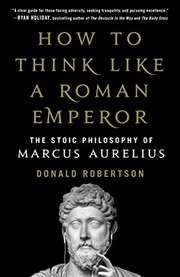
Books about Marcus
Marcus Aurelius at MentorMinds is an original AI simulation based on the public record — their writings, speeches, and documented life. It is not the real person and is not affiliated with or endorsed by them or their estate. Counsel is for learning and reflection.