


1925–1965 · United States
Malcolm X
“Education is the passport to the future, for tomorrow belongs to those who prepare for it today.”
— most often attributedTheir life
From street hustler to self-educated prison scholar to electrifying minister and human-rights advocate. His autobiography traces one of history's great self-transformations — and his willingness to publicly change his own mind near the end of his life may be the bravest chapter.
Known for
- Self-education and transformation in prison
- National spokesman for the Nation of Islam
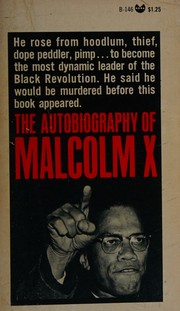
- The Autobiography of Malcolm X
- Public break with Elijah Muhammad
- Hajj pilgrimage and turn to orthodox Islam
- Organization of Afro-American Unity
The road they walked
He was born Malcolm Little in Omaha in 1925, the son of Earl Little, a Baptist preacher and organizer for Marcus Garvey's Back-to-Africa movement, and Louise Little, a Grenadian immigrant who kept the family's accounts and correspondence. The Littles were run out of two towns by white supremacist night riders before Malcolm turned four. When he was six, his father was found dead on the streetcar tracks in Lansing, Michigan — ruled an accident by police, though the family always believed he'd been murdered by a white supremacist group. The insurance company refused to pay out on a technicality, poverty tightened its grip, and within a few years his mother was committed to a state mental hospital, breaking the family apart. Malcolm bounced through foster homes and juvenile facilities before drifting to Boston and then Harlem, where by his teens he was Detroit Red — a hustler running numbers, dealing drugs, and steering thieves through the city's underworld.
A burglary conviction sent him to Massachusetts prison in 1946, and it was there, at nineteen, that the transformation began. A fellow inmate introduced him to the Nation of Islam; his siblings, who had already converted, kept up a steady correspondence. Malcolm taught himself to read seriously by copying out a dictionary word by word, and he devoured history, philosophy, and religion in the prison library, emerging in 1952 not as Malcolm Little but as Malcolm X — the X standing for the African name slavery had erased. He rose quickly through the Nation's ranks, becoming its most electrifying minister and, by the early 1960s, the public face many Americans associated with Black anger and Black pride alike, a spokesman whose intelligence and sharp tongue made him a fixture on television and campus stages even as it made him a target of FBI surveillance.
The break came in 1963 and 1964, when Malcolm's public remarks about the Kennedy assassination brought a suspension from the Nation, and his private disillusionment with Elijah Muhammad's personal conduct made the rupture permanent. He made the Hajj to Mecca in 1964, an experience that led him to embrace orthodox Sunni Islam and to soften — though not abandon — his views on racial separatism, having prayed alongside Muslims of every color. He founded Muslim Mosque, Inc. and the Organization of Afro-American Unity, reframing the Black struggle in America as a human-rights issue to be taken before the United Nations. This last year of his life, in which he publicly reconsidered ideas he had preached with total conviction, became the basis for The Autobiography of Malcolm X, told to Alex Haley and published just after his death — a book that remains one of the great American testimonies to the possibility of changing one's mind in public.
How their story ended
Malcolm X was assassinated on February 21, 1965, shot as he began a speech at the Audubon Ballroom in Harlem. He was thirty-nine. Three members of the Nation of Islam were convicted at the time, though decades later serious doubts emerged about the case, and in 2021 two of the men were formally exonerated. Who ordered the killing, and how many were truly responsible, remains disputed by historians to this day.
In their words
“Power in defense of freedom is greater than power in behalf of tyranny and oppression.”
— Speech, 1964
“If you're not careful, the newspapers will have you hating the people who are being oppressed, and loving the people who are doing the oppressing.”
— The Autobiography of Malcolm X
“We declare our right on this earth to be a human being, to be respected as a human being, to be given the rights of a human being in this society, on this earth, in this day, which we intend to bring into existence by any means necessary.”
— "Message to the Grassroots" speech, 1963
We attribute every quotation to the person we believe said it, and cite the source where we can place it. If you spot a misattribution or a factual error, please tell us — we will check it and correct the record.
From the Journal
Books by Malcolm
Books about Malcolm
Malcolm X at MentorMinds is an original AI simulation based on the public record — their writings, speeches, and documented life. It is not the real person and is not affiliated with or endorsed by them or their estate. Counsel is for learning and reflection.