


1828–1910 · Russia
Leo Tolstoy
“Everyone thinks of changing the world, but no one thinks of changing himself.”
— "Three Methods of Reform", Pamphlets (1900)Their life
Aristocrat, soldier, novelist of War and Peace and Anna Karenina — then, at fifty, a moral crisis that turned him into a plowing, bootmaking prophet of simplicity whose late essays taught Gandhi nonviolence.
Known for
- War and Peace
- Anna Karenina
- Confession and late religious writings
- Doctrine of Christian nonviolence
- Excommunication from the Orthodox Church
- Influence on Gandhi's nonviolent resistance
The road they walked
Lev Nikolayevich Tolstoy was born in 1828 into one of Russia's oldest noble families, at Yasnaya Polyana, the family estate south of Moscow he would inherit, leave, and finally flee. Orphaned by age nine, raised by aunts, he drifted through Kazan University without a degree, ran up gambling debts, and found his footing instead in the army — first in the Caucasus, then at the siege of Sevastopol during the Crimean War, where the sketches he sent home from the front made him a name in Petersburg literary circles before he was thirty.
He returned to Yasnaya Polyana, married Sofia Andreevna Behrs in 1862, and settled into a domestic life that produced thirteen children and, in the same years, the two novels that would define him: War and Peace, a vast reconstruction of Russia's war against Napoleon told through the lives of several families, and Anna Karenina, a tragedy of marriage and society that opens with one of fiction's most quoted lines. By the 1870s he was, by any measure, the most famous novelist alive in Europe.
Then, at the height of that fame, he stopped trusting it. A spiritual crisis in his early fifties — chronicled unsparingly in his Confession — convinced him that art, property, and even his own marriage were forms of vanity dressed up as virtue. He gave away his copyrights, took up peasant dress and manual labor, and spent his last three decades preaching a Christianity stripped to nonviolence, poverty, and plain living, a stance so uncompromising it got him excommunicated by the Orthodox Church in 1901. His late tracts on nonresistance to evil reached a young lawyer in South Africa named Mohandas Gandhi, who called Tolstoy one of his teachers.
How their story ended
In October 1910, at eighty-two, Tolstoy secretly left Yasnaya Polyana in the middle of the night, exhausted by years of conflict with his wife over money, copyrights, and the disposal of his estate. Traveling by train toward no fixed destination, he fell ill with pneumonia and died days later, on November 7 (November 20, New Style), 1910, in the stationmaster's house at the remote Astapovo railway station, with reporters and newsreel cameras already gathered outside. His death made headlines around the world, a fittingly public end for a man who had spent his last years trying to disappear.
In their words
“Happy families are all alike; every unhappy family is unhappy in its own way.”
— Anna Karenina (opening line)
“The sole meaning of life is to serve humanity.”
— A Confession
“Everyone thinks of changing the world, but no one thinks of changing himself.”
— "Three Methods of Reform", Pamphlets (1900)
We attribute every quotation to the person we believe said it, and cite the source where we can place it. If you spot a misattribution or a factual error, please tell us — we will check it and correct the record.
Tables where Leo sits


From the Journal
Books by Leo
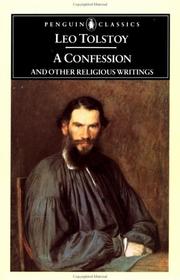

Books about Leo
Leo Tolstoy at MentorMinds is an original AI simulation based on the public record — their writings, speeches, and documented life. It is not the real person and is not affiliated with or endorsed by them or their estate. Counsel is for learning and reflection.