


1837–1913 · United States
J. Pierpont Morgan
“A man always has two reasons for doing anything: a good reason and the real reason.”
— Recounted by Owen Wister in his memoir of MorganTheir life
The banker whose word was collateral: he financed Edison, assembled U.S. Steel, and twice — 1895 and 1907 — personally stopped national financial panics by locking the money men in his library until they agreed.
Known for
- Founding J.P. Morgan & Co.
- Financing Thomas Edison's electrical ventures
- Assembling U.S. Steel
- the first billion-dollar company
- Halting the Panic of 1907
- 1895 rescue of U.S. gold reserves
The road they walked
John Pierpont Morgan was born in 1837 in Hartford, Connecticut, into banking rather than arriving at it — his father, Junius Spencer Morgan, ran a London merchant bank that funneled British capital into the young American economy. Pierpont was schooled in Boston, then Switzerland, then at the University of Göttingen, and by his twenties he was already moving between continents as a junior partner in his father's world, learning that in high finance a family's name was itself a form of currency.
He came of age in the disorder of the Gilded Age: a country industrializing at reckless speed, railroads overbuilt and underfunded, and no central bank to steady the currency or the credit markets. Morgan made himself indispensable by imposing order where the government could not — restructuring bankrupt railroads through what came to be called 'Morganization,' seating his own men on their boards, and forcing rival lines to cooperate instead of ruinously competing. In 1895, with the U.S. Treasury's gold reserves dangerously thin, he organized a private syndicate to replenish them, effectively lending the government his own credibility. In 1901 he engineered the merger that created U.S. Steel, the first billion-dollar corporation in American history. And in October 1907, when a banking panic threatened to cascade through the entire system, he summoned the city's leading financiers to his private library and would not let them leave until they had pledged the money to save it — a single man, briefly, functioning as the central bank the country didn't yet have.
That power did not go unquestioned. In 1912, months before his death, the Pujo Committee summoned him to Washington to testify about the concentration of financial control in a handful of hands — a 'money trust' — and the hearings helped build the case for the Federal Reserve System, created the following year, and for later reforms separating commercial and investment banking. Away from the trading floor, Morgan poured his fortune into art, rare books, and manuscripts, assembling a collection so vast it became, after his death, the Morgan Library in New York. He is remembered, uneasily but accurately, as both an architect of America's industrial rise and a man whose personal judgment briefly stood in for institutions the nation had not yet built.
How their story ended
Morgan died on March 31, 1913, in Rome, where he had gone seeking rest after months of declining health that followed his grueling Pujo Committee testimony; contemporaries and later biographers have debated whether the strain of that scrutiny hastened his decline, though the medical cause was generally attributed to physical exhaustion rather than any single ailment. His body was returned to the United States, and on the day of his funeral in New York the stock exchange closed for two hours in tribute — a fitting last measure of how thoroughly one man's presence had steadied, and defined, American finance.
In their words
“A man I do not trust could not get money from me on all the bonds in Christendom.”
— Testimony before the Pujo Committee, December 1912
“A man always has two reasons for doing anything: a good reason and the real reason.”
— Recounted by Owen Wister in his memoir of Morgan
“Before money or property. Money cannot buy it.”
— Testimony before the Pujo Committee, December 1912
We attribute every quotation to the person we believe said it, and cite the source where we can place it. If you spot a misattribution or a factual error, please tell us — we will check it and correct the record.
Tables where J. sits


The Boardroom
For building and running a business that lasts.


The Investors’ Council
For patient capital and clear judgment about money.
From the Journal
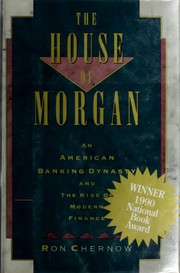
Books about J.
J. Pierpont Morgan at MentorMinds is an original AI simulation based on the public record — their writings, speeches, and documented life. It is not the real person and is not affiliated with or endorsed by them or their estate. Counsel is for learning and reflection.