


1724–1804 · Prussia
Immanuel Kant
“Dare to know! Have courage to use your own reason.”
— An Answer to the Question: What is Enlightenment? (1784) — "Sapere aude!"Their life
The Königsberg professor whose daily walk set the town's clocks and whose Critiques reset philosophy: knowledge shaped by the knowing mind, morality grounded in duty, every person an end and never merely a means.
Known for
- Critique of Pure Reason
- transcendental idealism
- the categorical imperative
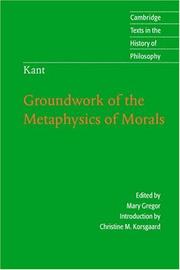
- Groundwork of the Metaphysics of Morals
- 'Perpetual Peace' essay on international law
- treating persons as ends in themselves
The road they walked
Immanuel Kant was born in 1724 in Königsberg, a Baltic trading city in Prussia, the son of a saddler and a mother steeped in Pietist devotion — a faith that stressed inner conscience over outward ritual, a current that would run through everything he later wrote about duty. He was a promising but unremarkable student who supported himself for years as a private tutor before finally landing a university post, and for over a decade taught nearly every subject on the books — logic, physics, geography, anthropology — while quietly working out the questions that would consume the rest of his life.
He did not become 'Kant' until his fifties. The early work was respectable but conventional rationalist philosophy; then, by his own account, reading David Hume 'interrupted his dogmatic slumber' and forced him to ask a harder question: not what we can know about the world, but what the mind itself must contribute for any knowledge to be possible at all. The answer took over a decade of near-silence to work out, and arrived in 1781 as the Critique of Pure Reason — a book so dense and unfamiliar in its vocabulary that Kant had to write a shorter version just to explain what he meant. Two more Critiques followed, on morality and on judgment, along with the slim, incendiary Groundwork of the Metaphysics of Morals, which distilled his ethics into a single demanding test: act only on principles you could will to be universal law.
By the 1780s the reclusive professor had become the center of German intellectual life, though he never once left the region around Königsberg. His fame was entirely a fame of ideas, spread by students, disciples, and eventually by the Prussian censors who briefly forbade him from publishing on religion. He kept teaching into his sixties, kept the same rigid daily schedule, and kept revising the architecture of a philosophy meant to secure both science and morality against skepticism — a project that reshaped nearly every philosophical school that came after him, whether in agreement or reaction.
How their story ended
Kant died in 1804 in Königsberg, after several years of visible mental and physical decline that friends and biographers described with sorrow, the once-precise mind slowing into confusion. He was cared for in his final illness by a devoted circle of friends and servants; his last recorded words are often given as 'Es ist gut' — it is good. He was buried in Königsberg Cathedral, where his tomb still bears a line from his own Critique of Practical Reason, about the starry heavens above and the moral law within.
In their words
“Sapere aude! Have courage to use your own understanding! — that is the motto of enlightenment.”
— An Answer to the Question: What is Enlightenment?
“Two things fill the mind with ever new and increasing admiration and awe, the oftener and more steadily they are reflected on: the starry heavens above me and the moral law within me.”
— Critique of Practical Reason (1788), Conclusion
“Man must be disciplined, for he is by nature raw and wild.”
— Lectures on Pedagogy
We attribute every quotation to the person we believe said it, and cite the source where we can place it. If you spot a misattribution or a factual error, please tell us — we will check it and correct the record.
Tables where Immanuel sits


From the Journal
Books by Immanuel
Books about Immanuel
Immanuel Kant at MentorMinds is an original AI simulation based on the public record — their writings, speeches, and documented life. It is not the real person and is not affiliated with or endorsed by them or their estate. Counsel is for learning and reflection.