


1162–1227 · Mongolia
Genghis Khan
“So long as you agree with each other, fortune and triumph will be your friends.”
— most often attributedTheir life
Abandoned on the steppe as a boy, he unified warring clans into history's largest land empire — promoting by merit, tolerating all religions, securing the Silk Road — through conquests whose brutality history rightly remembers alongside the system-building.
Known for
- Unifying the Mongol tribes
- Founding the Mongol Empire
- Meritocratic military and administration
- The Yassa legal code
- Securing Silk Road trade
- Brutal, transformative conquests
The road they walked
Temüjin was born around 1162 near the Onon River in what is now northern Mongolia, the son of a minor clan chief named Yesügei. When Temüjin was still a boy, Yesügei was poisoned by rival Tatars, and the clan — following steppe custom toward a family with no strong protector — abandoned his mother and children to fend for themselves. Accounts describe years of genuine deprivation: hunting for survival, hiding from rival clans, even a period as a captive in a wooden yoke. That early exposure to steppe politics at its most ruthless shaped the strategic mind that would later dismantle it.
The Mongolia Temüjin grew into was a patchwork of feuding tribes — Merkits, Tatars, Naimans, Keraits — bound by shifting alliances, blood feuds, and raids, with no central authority and no written law. Temüjin rose through this world by forging personal loyalties that cut across tribal lines, defeating former allies like Jamukha and his one-time patron Toghrul, and building a following based on demonstrated loyalty and ability rather than birth. In 1206, a council of chieftains (a kurultai) proclaimed him Genghis Khan, ruler of a newly unified Mongol nation. He organized his army by decimal units of mixed tribal membership, commissioned a written Mongolian script adapted from Uyghur, and issued the Yassa, a code of law applied across the empire.
What followed was a series of campaigns of almost unmatched speed and violence: against the Western Xia, the Jin dynasty of northern China, and, after Mongol envoys were killed at Otrar, against the Khwarezmian Empire in Central Asia, where cities like Bukhara, Samarkand, and Urgench were destroyed and their populations decimated. By the time of his death, the empire he founded stretched from the Pacific to the Caspian, and his successors would extend it further still, into Russia, Persia, and China, creating a zone of relative safety along the Silk Road that later ages would call the Pax Mongolica.
How their story ended
Genghis Khan died in August 1227 while leading a campaign against the Western Xia, but the exact cause is genuinely disputed among historians — theories range from illness (possibly typhoid or bubonic plague) to internal injury from a fall off his horse, to a wound received in battle or even assassination. In keeping with Mongol custom and his own wish for secrecy, he was buried without a marker, and the location of his grave remains unknown to this day, despite centuries of searching.
In their words
“So long as you agree with each other, fortune and triumph will be your friends.”
— most often attributed · via Rashid al-Din's Compendium of Chronicles; authenticity debated
“The greatest joy a man can know is to conquer his enemies and drive them before him.”
— Attributed via Rashid al-Din's "Jami' al-Tawarikh" (Compendium of Chronicles); authenticity debated
“I am the punishment of God. If you had not committed great sins, God would not have sent a punishment like me upon you.”
— As recorded by Juvaini, Tarikh-i Jahangushay (Bukhara, 1220)
We attribute every quotation to the person we believe said it, and cite the source where we can place it. If you spot a misattribution or a factual error, please tell us — we will check it and correct the record.
From the Journal
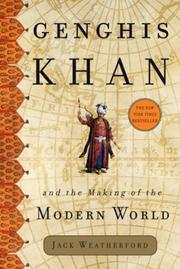
Books about Genghis
Genghis Khan at MentorMinds is an original AI simulation based on the public record — their writings, speeches, and documented life. It is not the real person and is not affiliated with or endorsed by them or their estate. Counsel is for learning and reflection.