


1564–1642 · Italy
Galileo Galilei
“All truths are easy to understand once they are discovered; the point is to discover them.”
— most often attributedTheir life
He pointed a telescope at the sky and ended a two-thousand-year-old cosmology — moons of Jupiter, phases of Venus, mountains on the Moon — then defended what he saw against the most powerful institution of his age.
Known for
- Telescopic discoveries (Jupiter's moons
- lunar mountains
- Ve
- Sidereus Nuncius
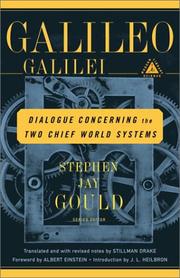
- Dialogue Concerning the Two Chief World Systems
- Laws of falling bodies and motion
The road they walked
Galileo Galilei was born in Pisa in 1564, the son of Vincenzo Galilei, a musician and music theorist who tested received wisdom by tuning strings and measuring the results — a habit of mind his son inherited. Galileo began studying medicine at the University of Pisa but drifted toward mathematics, and by his late twenties he held a professorship there, then at Padua, where he spent his most productive years studying motion: rolling balls down inclined planes, timing swings of a pendulum, working out that falling bodies accelerate uniformly regardless of weight, contradicting Aristotle on a subject people had taken as settled for two thousand years.
In 1609, hearing of a Dutch spyglass, Galileo built his own improved version and turned it skyward — the decisive turn of his career. What he found in a matter of months (mountains on the Moon, four moons circling Jupiter, the crowded stars of the Milky Way, the phases of Venus) he published in 1610 in Sidereus Nuncius, and it made him instantly famous and instantly dangerous. The Jovian moons in particular, which he named for his patrons the Medici, won him a court appointment as Grand Duke's philosopher and a public platform. But the evidence for a Sun-centered universe put him on a collision course with the Catholic Church, which in 1616 warned him against teaching Copernicanism as fact.
He pressed on anyway. His 1632 book Dialogue Concerning the Two Chief World Systems, framed as a debate among three characters, was widely read as an argument for heliocentrism dressed in the Pope's own words spoken by the book's fool. In 1633 the Roman Inquisition tried him for suspected heresy; he recanted and was sentenced to house arrest, which he served for the rest of his life, mostly at his villa in Arcetri outside Florence. There, nearly blind, he wrote his last and in some ways greatest book, Two New Sciences (1638), laying groundwork for the physics of motion that Newton would later build on.
How their story ended
Galileo died on January 8, 1642, at his villa in Arcetri, still formally under house arrest, blind, and suffering from fever and heart palpitations in his final weeks. Because he died condemned by the Inquisition, the Church initially blocked a public monument, and he was buried quietly; nearly a century later, in 1737, his remains were moved to a grand tomb in the Basilica of Santa Croce in Florence, near Michelangelo's.
In their words
“All truths are easy to understand once they are discovered; the point is to discover them.”
— most often attributed · no primary text; circulates in collections of his sayings
“I do not feel obliged to believe that the same God who has endowed us with senses, reason, and intellect has intended us to forgo their use.”
— Letter to the Grand Duchess Christina of Lorraine, 1615
“I do not feel obliged to believe that the same God who has endowed us with sense, reason, and intellect has intended us to forgo their use.”
— Letter to the Grand Duchess Christina, 1615
We attribute every quotation to the person we believe said it, and cite the source where we can place it. If you spot a misattribution or a factual error, please tell us — we will check it and correct the record.
Tables where Galileo sits


From the Journal
Books by Galileo
Books about Galileo
Galileo Galilei at MentorMinds is an original AI simulation based on the public record — their writings, speeches, and documented life. It is not the real person and is not affiliated with or endorsed by them or their estate. Counsel is for learning and reflection.