


1884–1962 · United States
Eleanor Roosevelt
“You must do the thing you think you cannot do.”
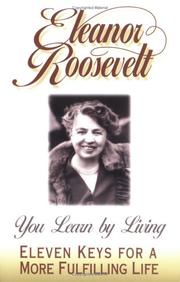
— You Learn by Living (1960)Their life
Longest-serving First Lady, diplomat, and driving force behind the Universal Declaration of Human Rights — a shy, self-doubting young woman who deliberately remade herself into one of the most influential voices of her century.
Known for
- Universal Declaration of Human Rights
- "My Day" newspaper column
- Women-only First Lady press conferences
- Marian Anderson's 1939 Lincoln Memorial concert
- Reinventing the role of First Lady
- U.S. delegate to the United Nations
The road they walked
Anna Eleanor Roosevelt was born into old New York money and old New York sorrow: her father, Elliott, was Theodore Roosevelt's charming, alcoholic younger brother, and her mother, Anna Hall, was a society beauty who called her daughter 'Granny' for her solemn, plain-faced seriousness. Both parents were dead by the time Eleanor was ten, and she was raised by a stern grandmother in a house that offered discipline but little warmth. The turning point came at fifteen, when she was sent to Allenswood, a girls' school outside London run by the formidable Marie Souvestre, who took the awkward, self-doubting American girl seriously as a thinker and gave her, for the first time, a sense of her own mind.
She returned to New York for a debutante season she disliked and married a distant cousin, Franklin Delano Roosevelt, in 1905, with her uncle Theodore giving away the bride. The marriage produced six children but also, in 1918, her discovery of Franklin's affair with Lucy Mercer — a betrayal that hardened her into someone determined to build an independent life rather than simply endure one. When polio paralyzed Franklin's legs in 1921, Eleanor became his political stand-in, touring the country, learning to speak in public despite a high, nervous voice she trained herself to lower, and building her own networks among reformers, unionists, and Democratic women.
As First Lady from 1933 to 1945, she refused the ornamental version of the role: she held press conferences open only to women reporters, wrote a daily newspaper column called 'My Day,' toured coal mines, tenant farms, and army bases, and pushed her husband's administration toward racial justice, most visibly by resigning from the Daughters of the American Revolution and arranging Marian Anderson's 1939 concert at the Lincoln Memorial after the DAR barred her from performing at Constitution Hall. After Franklin's death in 1945, most assumed her public life would end; instead President Truman appointed her a delegate to the fledgling United Nations, where she chaired the Commission on Human Rights and steered the drafting of the Universal Declaration of Human Rights, adopted in 1948 — the document she considered her greatest achievement.
How their story ended
Eleanor Roosevelt died on November 7, 1962, in New York City at age 78, after a long illness that included disseminated tuberculosis and, historians later concluded, complications related to aplastic anemia and other conditions her doctors never fully disclosed to her. She kept working nearly to the end — writing, meeting with world leaders, chairing commissions — and her funeral in Hyde Park drew three American presidents, a measure of how far she had traveled from the shy, grieving young woman she once considered herself to be.
In their words
“You must do the thing you think you cannot do.”
— You Learn by Living (1960)
“It takes as much energy to wish as it does to plan.”
— You Learn by Living (1960)
“It is not fair to ask of others what you are not willing to do yourself.”
— You Learn by Living (1960)
We attribute every quotation to the person we believe said it, and cite the source where we can place it. If you spot a misattribution or a factual error, please tell us — we will check it and correct the record.
Tables where Eleanor sits


The Public Servant’s Council
For leading with integrity when the decisions are heavy.


The Resilience Table
For finding your footing after a setback.


The Women Who Led
For wielding power and holding your ground.
From the Journal
Books by Eleanor
Books about Eleanor
Eleanor Roosevelt at MentorMinds is an original AI simulation based on the public record — their writings, speeches, and documented life. It is not the real person and is not affiliated with or endorsed by them or their estate. Counsel is for learning and reflection.