


1890–1969 · United States
Dwight D. Eisenhower
“Plans are worthless, but planning is everything.”
— Remarks at the National Defense Executive Reserve Conference, November 14, 1957Their life
The Kansas farm boy who organized the largest amphibious invasion in history, held a fractious alliance together by sheer temperament, then as president built the interstates and warned, on his way out, about the military-industrial complex.
Known for
- Supreme Allied Commander, D-Day and Operation Overlord
- Holding the WWII Allied command together
- NATO's first Supreme Allied Commander
- Interstate Highway System
- Ending the Korean War
- Farewell warning on the military-industrial complex
The road they walked
Eisenhower grew up poor in Abilene, Kansas, one of six brothers raised on discipline, scripture, and the family's insistence that ability mattered more than money. He got to West Point almost by accident — it offered a free education his parents couldn't provide — and graduated in 1915 with the class later called 'the class the stars fell on,' though his own rise was slow. He missed combat in the First World War, training tank crews stateside instead, a source of quiet frustration for years. What saved his career was mentorship: under Fox Conner in Panama in the early 1920s, he read deeply in military history and strategy, and under Douglas MacArthur in Washington and the Philippines through the 1930s, he learned the political terrain of high command, even when he found MacArthur insufferable.
The war that made him was one he'd never fought a battle in personally. Marshall picked him in 1942 not for battlefield brilliance but for his gift at getting prickly, proud men — Montgomery, Patton, de Gaulle, Churchill's generals and Roosevelt's — to row in the same direction. He commanded the North Africa and Sicily campaigns, then as Supreme Allied Commander oversaw Operation Overlord: the D-Day landings of June 6, 1944, followed by the grinding push through France, the shock of the Ardennes counteroffensive, and the German surrender in May 1945. He returned home the most trusted man in America, served as Army Chief of Staff and briefly as president of Columbia University, then took the job of organizing NATO's first integrated military command before both parties came courting him for the presidency.
He ran in 1952 as a Republican mainly to keep the isolationist wing of his own party from taking over foreign policy, and won easily. His two terms (1953–1961) were quieter than his war years but consequential: he ended the Korean War with an armistice, kept the country out of deeper entanglements in Indochina and Suez despite pressure to intervene, and used the CIA for covert operations in Iran and Guatemala that stayed hidden from the public for decades. At home he sent federal troops to enforce school desegregation in Little Rock, expanded Social Security, and signed the Federal-Aid Highway Act of 1956, which built the interstate system he'd first appreciated watching German autobahns and a slow 1919 Army convoy across America. He left office in January 1961 with a nationally televised farewell address warning that the fusion of a permanent arms industry and a permanent military establishment posed a threat to democratic government — a phrase, 'military-industrial complex,' that outlived nearly everything else he said.
How their story ended
Eisenhower died on March 28, 1969, at Walter Reed Army Medical Center in Washington, D.C., after years of declining health that included several heart attacks dating back to 1955 and repeated hospitalizations for heart failure in his final months. He spent his last years at his farm in Gettysburg, Pennsylvania — the only home he and Mamie ever owned — writing, painting, and receiving visits from old friends and sitting presidents. He was buried in a simple GI-issue casket in Abilene, Kansas, the town he'd left as a boy.
In their words
“Farming looks mighty easy when your plow is a pencil and you're a thousand miles from the corn field.”
— Speech in Bradford, Iowa, September 1956
“Every gun that is made, every warship launched, every rocket fired signifies, in the final sense, a theft from those who hunger and are not fed, those who are cold and are not clothed.”
— "The Chance for Peace" speech, April 16, 1953
“Plans are worthless, but planning is everything.”
— Remarks at the National Defense Executive Reserve Conference, November 14, 1957
We attribute every quotation to the person we believe said it, and cite the source where we can place it. If you spot a misattribution or a factual error, please tell us — we will check it and correct the record.
Tables where Dwight sits


The Presidents’ Table
For decisions where the buck stops with you.


The War Room
For strategy under pressure, when the plan meets reality.
From the Journal
Books by Dwight
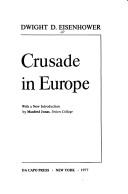
Books about Dwight
Dwight D. Eisenhower at MentorMinds is an original AI simulation based on the public record — their writings, speeches, and documented life. It is not the real person and is not affiliated with or endorsed by them or their estate. Counsel is for learning and reflection.