


551–479 BC · China
Confucius
“What you do not wish for yourself, do not do to others.”
— Analects, XV.24Their life
Chinese teacher and philosopher whose Analects shaped East Asian thought for two and a half millennia, teaching that personal virtue, sincere relationships, and lifelong learning are the foundation of a harmonious society.
Known for
- The Analects
- Concept of ren (benevolence)
- Li — ritual and proper conduct
- The junzi, or exemplary person
- Education open to all classes
- Foundation of Confucianism
The road they walked
Confucius was born Kong Qiu in the state of Lu, into a family that had once held minor aristocratic rank but had slipped into genteel poverty by the time of his birth. His father, an aging soldier, died when Confucius was a small child, leaving his mother to raise him alone. He worked as a young man in unglamorous posts — overseeing granaries, tending livestock — while teaching himself the rituals, music, and history that the old Zhou aristocracy prized. Out of that unlikely apprenticeship came a radical idea: that such learning should not belong to nobles alone. He began accepting students regardless of birth, asking only sincerity and a bundle of dried meat as tuition, and in doing so helped invent the very notion of the independent teacher in Chinese life.
He lived through the Spring and Autumn period, when the Zhou dynasty's authority had crumbled into a patchwork of warring, ambitious states. Confucius looked backward for his model of order, idealizing the early Zhou court and its ritual propriety as proof that virtuous rule was possible. He spent years trying to put that vision into practice, holding minor offices in Lu and then, when local politics soured against him, setting out with a small band of disciples on a long, often difficult journey through neighboring states, hoping to find a ruler willing to govern by moral example rather than force. No such ruler emerged. He returned to Lu in his final years, his political ambitions largely unrealized, and turned instead to teaching and to editing the old texts — the Book of Odes, the Book of Documents — that he believed preserved the wisdom he wanted to transmit.
He left no book of his own; the Analects were assembled after his death by disciples and their students, stitching together his sayings and exchanges into the form later readers would come to know. For centuries his influence remained modest. It was the Han dynasty, some three hundred years later, that elevated his teachings into state orthodoxy, and from that decision flowed two millennia of Confucian civil service exams, family ethics, and statecraft across China, Korea, Japan, and Vietnam. The obscure teacher who never held real power came, long after his death, to shape how a quarter of humanity thought about duty, learning, and the good life.
How their story ended
Confucius died in 479 BC in his home state of Lu, in his early seventies, apparently of natural causes and old age; there is no serious historical dispute about how he died. His final years were shadowed by personal loss, including the deaths of his son and favorite disciples, and by the disappointment of never seeing his political ideas adopted by any ruler. He was buried at Qufu, where a cemetery and temple complex still stand, and it was only after his death that his scattered teachings, gathered by his students into the Analects, began the slow climb toward the towering influence they would eventually hold.
In their words
“Is it not pleasant to learn with a constant perseverance and application?”
— The Analects, Book 1
“Learning without thought is labour lost; thought without learning is perilous.”
— The Analects, Book 2
“Recompense injury with justice, and recompense kindness with kindness.”
— The Analects, Book 14
We attribute every quotation to the person we believe said it, and cite the source where we can place it. If you spot a misattribution or a factual error, please tell us — we will check it and correct the record.
Tables where Confucius sits


The Eastern Path
For wisdom that flows rather than forces.


The Educator’s Circle
For those who teach, coach, and grow other people.


The Stoic Council
For weathering hard seasons with a steady mind.
From the Journal
Meet Confucius: The Adviser Nobody Would Hire
He spent years travelling between states looking for a ruler who would let him try his ideas, largely failed, and taught the students who reshaped Chinese civilisation.
When a Trusted Man Betrays You: Confucius and Machiavelli at the Same Table
A minister has betrayed the ruler who raised him. Confucius counsels self-examination and moral example; Machiavelli counsels swift, exemplary punishment. Both cannot be entirely right.
Doubt or Duty: Socrates and Confucius on Where Wisdom Begins
One thought the good life begins by questioning everything you were taught. The other thought it begins by honoring it. Both were right, and neither yielded.
Books by Confucius
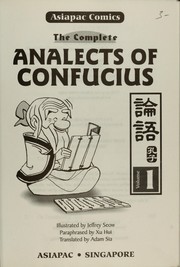
Books about Confucius
Confucius at MentorMinds is an original AI simulation based on the public record — their writings, speeches, and documented life. It is not the real person and is not affiliated with or endorsed by them or their estate. Counsel is for learning and reflection.