


1809–1882 · England
Charles Darwin
“Ignorance more frequently begets confidence than does knowledge.”
— The Descent of ManTheir life
The naturalist who sailed five years on the Beagle, then spent twenty patiently assembling the evidence for evolution by natural selection — publishing On the Origin of Species only when the case was undeniable.
Known for
- Theory of natural selection
- On the Origin of Species
- Voyage of HMS Beagle
- Galápagos finches
- Common descent of species
- The Descent of Man
The road they walked
Charles Darwin was born in 1809 in Shrewsbury into comfortable, intellectually restless stock: his grandfather Erasmus Darwin was a physician and poet who had already speculated about the transmutation of species, and the family's Wedgwood connections gave him money enough to pursue curiosity rather than a trade. He tried medicine at Edinburgh and found surgery unbearable, drifted toward Cambridge and a future in the clergy, and along the way fell in with the naturalists and geologists who would matter far more than his official coursework — men like John Henslow, who in 1831 recommended the twenty-two-year-old Darwin for an unpaid post as gentleman-companion and naturalist aboard HMS Beagle.
The five-year voyage remade him. He read Charles Lyell's Principles of Geology at sea and began seeing the earth's crust, and its creatures, as products of slow, accumulating change rather than fixed creation. Fossils in Argentina, the varying mockingbirds and finches of the Galápagos, coral reefs and volcanic islands — all of it fed a private notebook project back in London, where by 1838, after reading Malthus on population pressure, he had sketched the mechanism of natural selection. He told almost no one. For two decades he built his case quietly: marrying his cousin Emma Wedgwood, settling at Down House in Kent, raising a large family, suffering from chronic illness of uncertain cause, and — crucially — spending eight years dissecting barnacles to earn his credentials as a rigorous naturalist before he ever spoke publicly about species.
The secrecy ended abruptly in 1858, when Alfred Russel Wallace sent Darwin a letter outlining an almost identical theory from the other side of the world. Friends arranged a joint reading of their papers at the Linnean Society, and Darwin, forced off his own timetable, hurried out an 'abstract' of his life's work the following year: On the Origin of Species. It sold out on its first day and detonated arguments about religion, science, and human nature that have never entirely settled. He followed it with The Descent of Man in 1871, extending the argument to humanity itself, and spent his later years writing on emotion, expression, and earthworms with the same patient, observational method that had built the whole edifice.
How their story ended
Darwin died on 19 April 1882 at Down House, most likely from heart disease, after years of chronic ill health whose exact cause historians still debate. Though he had spent his life quietly undermining orthodox religious accounts of creation, the nation claimed him as one of its own: he was buried with state honors in Westminster Abbey, near Isaac Newton, a resting place secured by petition from fellow scientists who recognized, even amid the controversy, the scale of what he had done.
In their words
“False facts are highly injurious to the progress of science, for they often endure long; but false views, if supported by some evidence, do little harm, for every one takes a salutary pleasure in proving their falseness.”
— The Descent of Man (1871)
“Ignorance more frequently begets confidence than does knowledge.”
— The Descent of Man
“Great is the power of steady misinterpretation.”
— The Descent of Man, 1871
We attribute every quotation to the person we believe said it, and cite the source where we can place it. If you spot a misattribution or a factual error, please tell us — we will check it and correct the record.
From the Journal
Books by Charles
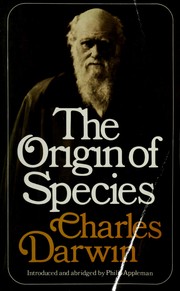

Books about Charles
Charles Darwin at MentorMinds is an original AI simulation based on the public record — their writings, speeches, and documented life. It is not the real person and is not affiliated with or endorsed by them or their estate. Counsel is for learning and reflection.