


1934–1996 · United States
Carl Sagan
“Extraordinary claims require extraordinary evidence.”
— Cosmos (1980 TV series)Their life
The astronomer who put humanity's home in perspective — a pale blue dot suspended in a sunbeam — and taught millions that skepticism and wonder are the same discipline practiced honestly.
Known for
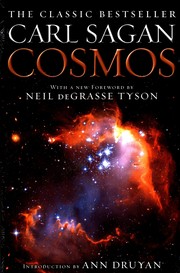
- Cosmos: A Personal Voyage
- Pale Blue Dot photograph
- Voyager Golden Record
- SETI and extraterrestrial-life research
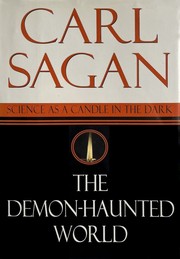
- The Demon-Haunted World
- Nuclear winter theory
The road they walked
Carl Sagan grew up in a working-class Jewish household in Brooklyn, the son of a garment-factory worker and a mother who nursed her own thwarted intellectual ambitions through her son. A visit to the 1939 World's Fair and a boyhood diet of pulp science fiction set him dreaming of other worlds before he had the vocabulary for them; a library card and a precocious appetite for astronomy books did the rest. He carried that hunger to the University of Chicago, earning his bachelor's, master's, and finally a doctorate in astronomy and astrophysics in 1960, studying under planetary scientist Gerard Kuiper at a moment when the solar system's planets were still mostly blank slates for speculation.
Sagan built his scientific reputation doing real, unglamorous planetary science: modeling the runaway greenhouse effect that makes Venus's surface hot enough to melt lead, and showing that the seasonal changes on Mars long read as vegetation were more likely windblown dust. Denied tenure at Harvard in 1968, he moved to Cornell, where he would spend the rest of his career, eventually directing its Laboratory for Planetary Studies. He worked closely with NASA on the Mariner, Viking, and Voyager missions, and it was Sagan who pushed for the Pioneer plaques and the Voyager Golden Record — humanity's calling cards flung into the dark — and who later persuaded NASA to turn Voyager 1's camera back toward Earth from four billion miles out, producing the photograph he named the Pale Blue Dot.
What made Sagan singular was his refusal to keep science behind a velvet rope. His 1980 television series Cosmos, watched by hundreds of millions worldwide, and its companion book, along with earlier works like the Pulitzer Prize–winning The Dragons of Eden, turned a television audience into amateur cosmologists. He co-founded the Planetary Society in 1980 to champion space exploration and the search for extraterrestrial intelligence, helped bring public attention to the concept of nuclear winter in the early 1980s, wrote the novel Contact, and in his final years produced The Demon-Haunted World, a plainspoken defense of scientific reasoning against pseudoscience that remains one of his most quoted works.
How their story ended
Sagan died on December 20, 1996, at the Fred Hutchinson Cancer Research Center in Seattle, two years into a fight against myelodysplastic syndrome, a bone-marrow disorder. He underwent multiple bone marrow transplants using cells donated by his sister, and pneumonia ultimately overtook him during his final relapse. He was 62. His last months were spent, characteristically, still writing and giving interviews, insisting to the end on hope tempered by evidence rather than false comfort.
In their words
“It is far better to grasp the universe as it really is than to persist in delusion, however satisfying and reassuring.”
— Pale Blue Dot (1994)
“Absence of evidence is not evidence of absence.”
— The Demon-Haunted World (1995)
“In science it often happens that scientists say, 'You know that's a really good argument; my position is mistaken,' and then they actually change their minds and you never hear that old view from them again.”
— The Demon-Haunted World
We attribute every quotation to the person we believe said it, and cite the source where we can place it. If you spot a misattribution or a factual error, please tell us — we will check it and correct the record.
From the Journal
Books by Carl
Books about Carl
Carl Sagan at MentorMinds is an original AI simulation based on the public record — their writings, speeches, and documented life. It is not the real person and is not affiliated with or endorsed by them or their estate. Counsel is for learning and reflection.