


1706–1790 · United States
Benjamin Franklin
“Well done is better than well said.”
— Poor Richard's AlmanackTheir life
Printer, inventor, diplomat, and founding father — a self-made polymath who systematized self-improvement with his thirteen virtues and founded a mutual-improvement club, the Junto, that prefigured the mastermind group.
Known for
- Poor Richard's Almanack
- Drafting and signing the Declaration of Independence
- Electricity experiments and the lightning rod
- Securing the French alliance in the Revolution
- Constitutional Convention delegate
- Founding civic institutions (library, fire company, hospital
The road they walked
Franklin was born in Boston in 1706, the fifteenth of seventeen children born to a soap-and-candle maker. Formal schooling ended at ten; by twelve he was indentured to his older brother James, a printer, where he learned the trade and read voraciously to educate himself. At seventeen, after chafing under his brother's temper, he broke the apprenticeship and fled to Philadelphia with almost nothing, arriving hungry and friendless in a city that would become the stage for the rest of his life.
Philadelphia in the 1720s was a raw, striving colonial port, and Franklin rose with it. He built a printing business, bought The Pennsylvania Gazette, and turned Poor Richard's Almanack into a bestseller whose proverbs — 'early to bed and early to rise,' among them — spread his voice well beyond the city. He used his growing means to seed institutions that had no precedent in the colonies: a subscription library, a volunteer fire company, a fire insurance company, an academy that became the University of Pennsylvania, and a public hospital. In the 1740s and '50s he turned to science, and his experiments with electricity — including the 1752 kite experiment demonstrating that lightning was electrical — brought him international fame and the invention of the lightning rod, a device that spread across the Atlantic world within his lifetime.
By the 1750s Franklin was as much statesman as tradesman. He served as a colonial agent in London for nearly two decades, watching relations between Britain and its colonies curdle, and returned home in 1775 to join the fight for independence. He sat on the committee that drafted the Declaration of Independence and signed it in 1776. Sent to Paris as a diplomat, he became a celebrity in the French court, secured the military alliance that helped win the war, and later negotiated the Treaty of Paris. In his final years he presided over Pennsylvania as its chief executive, helped shape the Constitution at the 1787 convention, and, in one of his last public acts, petitioned Congress to abolish slavery.
How their story ended
Franklin died in Philadelphia on April 17, 1790, at eighty-four, after a long decline attributed to pleurisy and complications of the lung disease he had suffered intermittently for years. Some 20,000 people are said to have turned out for his funeral, an extraordinary public tribute for the era. He spent his final months still writing and corresponding, including his petition urging Congress to end slavery, closing out a life that had run from a candlemaker's shop to the founding documents of a nation.
In their words
“Lost time is never found again.”
— Poor Richard's Almanack
“Well done is better than well said.”
— Poor Richard's Almanack
“Diligence is the mother of good luck.”
— Poor Richard's Almanack
We attribute every quotation to the person we believe said it, and cite the source where we can place it. If you spot a misattribution or a factual error, please tell us — we will check it and correct the record.
Tables where Benjamin sits


The Achievement Society
For turning ambition into a definite plan.


The Founder’s Table
For building something from nothing — and keeping your nerve.


The Inventors’ Bench
For chasing curiosity and building what doesn’t exist yet.


The Pamphleteers
For the argument that must move people now — persuasion as action.
From the Journal
Books by Benjamin
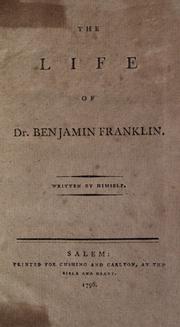
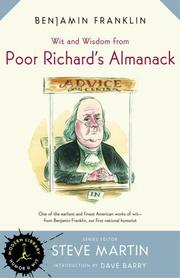
Books about Benjamin
Benjamin Franklin at MentorMinds is an original AI simulation based on the public record — their writings, speeches, and documented life. It is not the real person and is not affiliated with or endorsed by them or their estate. Counsel is for learning and reflection.