


384–322 BC · Greece
Aristotle
“We become just by doing just acts, temperate by doing temperate acts, brave by doing brave acts.”
— Nicomachean Ethics, 1103a-b (Ross)Their life
Student of Plato, tutor of Alexander, and the most systematic mind of antiquity — he founded formal logic and organized knowledge itself: ethics, politics, biology, rhetoric, poetics. For nearly two thousand years, 'the Philosopher' simply meant Aristotle.
Known for
- Founding formal logic (the syllogism)
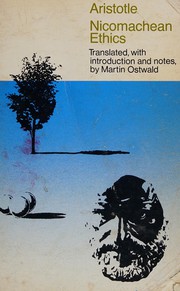
- Nicomachean Ethics and the doctrine of the mean
- Politics and theories of governance
- Poetics and the analysis of tragedy
- Pioneering biological classification
- Tutoring Alexander the Great
The road they walked
Aristotle was born in 384 BC in Stagira, a small Greek town on the Chalcidice peninsula, the son of Nicomachus, court physician to the Macedonian king Amyntas III. That detail matters more than it seems: growing up around a father who dissected and diagnosed gave Aristotle an early taste for the physical world, for looking closely at bodies and causes rather than only at abstractions. Orphaned as a boy, he was raised by a guardian and, at seventeen, sent to Athens — then the intellectual capital of the Greek world — to study under Plato at the Academy.
He stayed at the Academy for some twenty years, first as student, eventually as a mature thinker in his own right, absorbing Plato's idealism even as he began to push against it. When Plato died in 347 BC and leadership of the school passed to someone else, Aristotle left Athens. He spent the following years in Asia Minor and on the island of Lesbos, doing hands-on research into marine life and animal anatomy — work that would later make him one of history's first real biologists. It was during this period, around 343 BC, that Philip II of Macedon summoned him to tutor his teenage son, Alexander, at the royal court in Mieza. The two years he spent shaping the mind of the future conqueror of the known world remain one of history's more startling juxtapositions: the philosopher of moderation instructing the man who would build an empire on excess.
Aristotle returned to Athens in 335 BC and founded his own school, the Lyceum, where he lectured for over a decade — walking the grounds with students as he talked, which is likely why his followers came to be called the Peripatetics, 'the walkers.' Almost everything that survives of his work comes from this period: not polished books meant for publication, but dense lecture notes on logic, ethics, politics, physics, poetry, and the natural world, covering nearly every field of inquiry then imaginable. It was this compulsion to observe, classify, and systematize — to build the very tools of reasoning before using them — that made him, for centuries afterward, simply 'the Philosopher,' as though there were no other worth naming.
How their story ended
After Alexander's death in 323 BC, anti-Macedonian feeling surged in Athens, and Aristotle — with his Macedonian ties — found himself charged with impiety, echoing the accusation once leveled at Socrates. Rather than, in his words, let Athens sin twice against philosophy, he withdrew to Chalcis on the island of Euboea, where his mother's family held property. He died there in 322 BC, apparently of natural causes, though ancient sources are thin on specifics and historians have never pinned down the exact illness. It was a quiet end for a man who had spent his life cataloguing the world, closing out a final year in exile rather than at the school he'd built.
In their words
“The whole is greater than the sum of its parts.”
— Metaphysics, Book H
“The greatest thing by far is to be a master of metaphor.”
— Poetics
“Poetry is finer and more philosophical than history; for poetry expresses the universal, and history only the particular.”
— Poetics
We attribute every quotation to the person we believe said it, and cite the source where we can place it. If you spot a misattribution or a factual error, please tell us — we will check it and correct the record.
From the Journal
Books by Aristotle
Books about Aristotle
Aristotle at MentorMinds is an original AI simulation based on the public record — their writings, speeches, and documented life. It is not the real person and is not affiliated with or endorsed by them or their estate. Counsel is for learning and reflection.