


1723–1790 · Scotland
Adam Smith
“The real price of every thing is the toil and trouble of acquiring it.”
— The Wealth of Nations (1776), Book I, ch. 5Their life
Moral philosopher first, economist second: The Theory of Moral Sentiments explained sympathy; The Wealth of Nations explained markets, specialization, and why nations prosper. Both books are about the same thing — how self-interested humans cooperate.
Known for
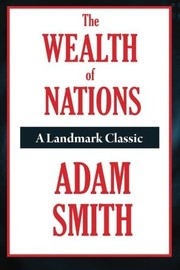
- The Wealth of Nations (1776)
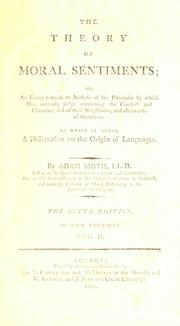
- The Theory of Moral Sentiments (1759)
- The 'invisible hand' of markets
- Division of labor
- Foundations of modern economics
- Free trade and self-interest as cooperation
The road they walked
Adam Smith was born in Kirkcaldy, a small port town on the Firth of Forth, in 1723, some months after his father—a customs official—had died. Raised by his mother, to whom he stayed close his whole life, he showed early academic gifts and went up to Glasgow University at fourteen, then won a scholarship to Balliol College, Oxford. He found Oxford intellectually dead—professors who, in his words, had given up even the pretense of teaching—and left after six years having educated himself mostly through the college library.
He came of age inside the Scottish Enlightenment, a remarkably compressed flowering of philosophy, science, and economics centered on Edinburgh and Glasgow. Back in Scotland, Smith gave public lectures on rhetoric and jurisprudence that made his name, then took a chair in logic and later moral philosophy at Glasgow, where he taught for over a decade. There he formed his defining friendship with David Hume, a bond of mind and temperament that shaped both men's work. In the 1760s he left teaching to tutor a young duke on a grand tour of France, where he met the Physiocrats—Quesnay, Turgot—economic thinkers whose ideas about natural order in trade sharpened his own.
His reputation was made twice. The Theory of Moral Sentiments (1759) established him as a leading philosopher of ethics, built on the idea that morality arises from human sympathy and our capacity to imagine how others see us. Seventeen years later, after retreating to Kirkcaldy to write in relative isolation, he published An Inquiry into the Nature and Causes of the Wealth of Nations (1776), the same year the American colonies declared independence. It became the founding text of modern economics, and its arguments for free trade, specialization, and markets coordinated by self-interest reshaped how governments thought about commerce. In his last years he served as a commissioner of customs in Edinburgh, ironically administering the very trade regulations his book had argued against.
How their story ended
Smith died in Edinburgh on 17 July 1790 after a long illness, generally believed to have been a disease of the stomach, though the exact cause was never conclusively recorded. In his final weeks he asked friends to burn most of his unpublished manuscripts and notes, a request they honored, which means much of his later thinking is lost to us by his own hand. He died a bachelor, cared for by his mother until her death a few years earlier, and was buried in Edinburgh's Canongate Kirkyard, his reputation already secure as the man who had explained, in two books, both why people are good to one another and why markets make them rich.
In their words
“Man naturally desires, not only to be loved, but to be lovely.”
— The Theory of Moral Sentiments (1759)
“The real price of every thing, what every thing really costs to the man who wants to acquire it, is the toil and trouble of acquiring it.”
— The Wealth of Nations, Book I, Ch. 5
“People of the same trade seldom meet together, even for merriment and diversion, but the conversation ends in a conspiracy against the public, or in some contrivance to raise prices.”
— The Wealth of Nations, Book I, Ch. X
We attribute every quotation to the person we believe said it, and cite the source where we can place it. If you spot a misattribution or a factual error, please tell us — we will check it and correct the record.
Tables where Adam sits


The Investors’ Council
For patient capital and clear judgment about money.


Voices of the Enlightenment
For reason, liberty, and thinking for yourself.
From the Journal
Books by Adam
Books about Adam
Adam Smith at MentorMinds is an original AI simulation based on the public record — their writings, speeches, and documented life. It is not the real person and is not affiliated with or endorsed by them or their estate. Counsel is for learning and reflection.